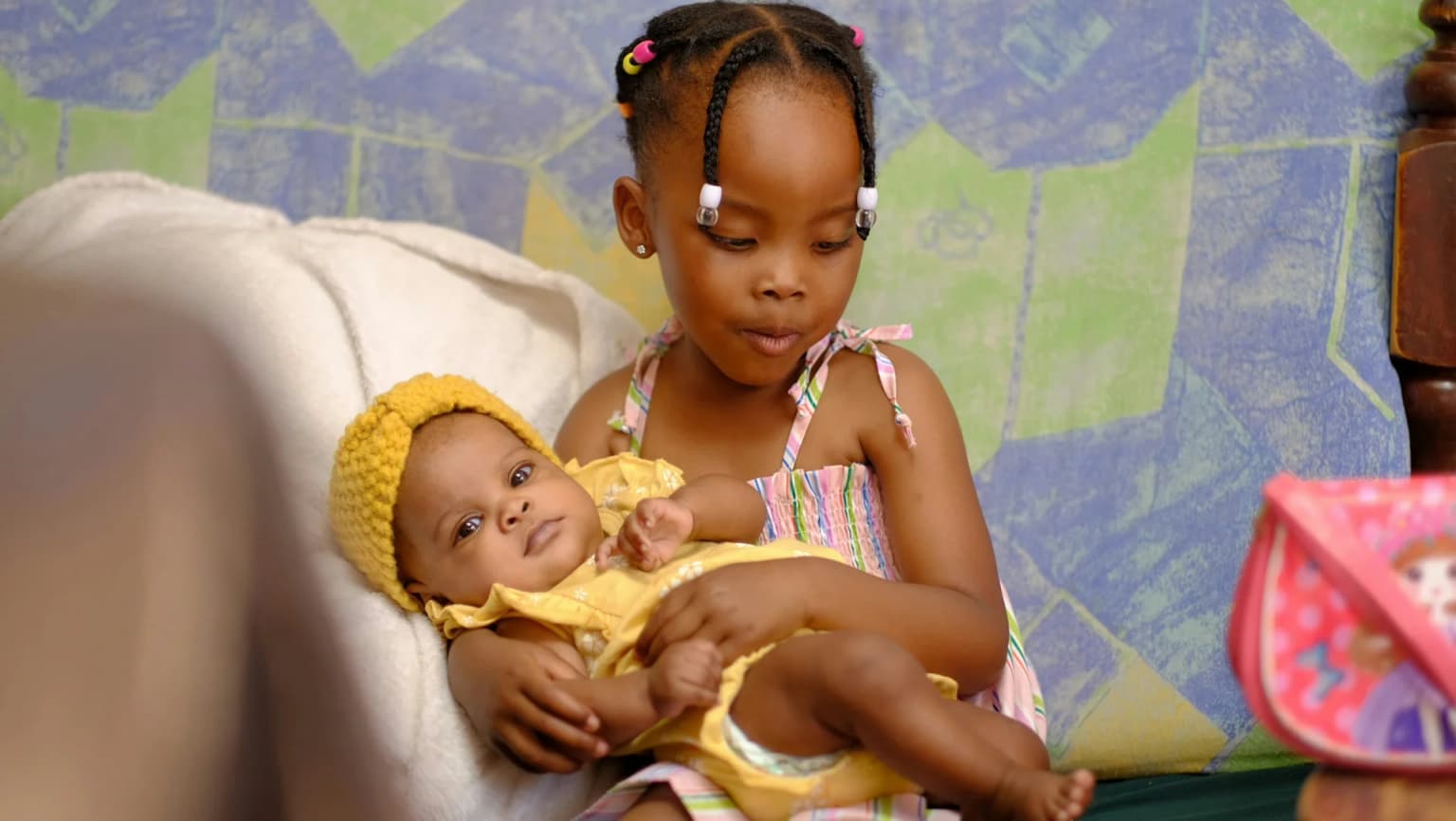
New Incentives

Short description
Pays caregivers in northern Nigeria small amounts for bringing their children to be vaccinated.
Organisation
New Incentives was founded in 2011 by Svetha Janumpalli in the United States and is based in Covina, California.1 After early pilots with conditional cash transfers, it moved to its current focus in 2016; the vaccination programme has run since May 2017.2 In Nigeria it operates as the All Babies Are Equal (ABAE) Initiative, because the name New Incentives was not permitted at registration.2
The organisation runs nothing but this one programme. It employs over 3,100 people, more than 2,700 of them in Nigeria.1 As of August 2026 it works in eleven northern states: Bauchi, Gombe, Jigawa, Kaduna, Kano, Katsina, Kebbi, Niger, Sokoto, Yobe and Zamfara.34
The problem: low vaccination coverage in northern Nigeria
Vaccines against tuberculosis, diphtheria, tetanus, pertussis, hepatitis B, Hib, pneumococcal disease and measles are available free of charge in Nigerian government clinics. They still fail to reach many children. In 2024 around 33% of all children in Nigeria had not received every recommended vaccination. The country holds about 3% of the world's population but accounts for roughly 16% of all deaths among children under five, and an estimated 38% of those deaths are due to vaccine-preventable diseases.1
In the states where New Incentives works, only 39–68% of children are vaccinated depending on the state, against an average of 81% across Nigeria's other states.2
The obstacle is rarely the vaccine itself. A clinic visit costs transport money, often half a day, and lost earnings, and it has to be repeated six times in the first year of life.1 For households living at subsistence level that is a real barrier.
Approach
Caregivers receive 1,000 naira per immunisation visit across the six visits in the national schedule. Since 2024 a further 5,000 naira is paid once a child completes the schedule through the second measles dose at 15 months. That brings the total to 11,000 naira, or around €6.60.12
Vaccines are administered solely by government clinic staff. New Incentives posts field officers who observe the vaccination, verify eligibility and disburse the cash on the spot. Alongside this it runs community awareness work and a dedicated team that identifies vaccine supply bottlenecks and resolves them with government cold chain officers.2
Because every disbursement involves physical cash, the anti-fraud machinery is substantial: photo documentation of each disbursement, facial recognition against duplicate enrolments, GPS and timestamp checks on locations, cash reconciliation at the start and end of each day, and unannounced audits on at least 5% of disbursement days.2
Since February 2025 New Incentives has been testing a second intervention on the same infrastructure, delivering oral rehydration solution and zinc for childhood diarrhoea.5
Impact
The evidence base is a randomised controlled trial run by IDinsight from August 2017 to February 2020 on GiveWell's commission. Against control clinics, coverage in treatment clinics was 16 percentage points higher for BCG, 21 percentage points higher for Penta 1 and 14 percentage points higher for measles.6 Across all vaccines that amounts to a rise of roughly 22 percentage points from a baseline of 36%.7
The programme has grown sharply since, from around 70,000 children in three states in 2020 to over 1.5 million children in nine states in 2023.8 New Incentives reports more than 7.4 million infants enrolled, 33.3 million cash transfers disbursed and 116 million vaccinations encouraged in total, as of August 2026.9 For January 2026 alone the programme reports 172,265 infants newly enrolled and 1.594 billion naira disbursed across 43,915 sessions.3
An enrolled child costs about $18, an additional child vaccinated $58–$153. The cost per death averted runs from $1,500 to $6,000 depending on the state.7 Measured against an equivalent cash transfer, GiveWell's benchmark, the programme is worth 11 to 44 times as much, with a weighted average of 22 times.10
What stands out is that costs came in well below expectations. The first grant of $17 million assumed $38 per child; the actual figure was about $18. The reasons: economies of scale, the organisation's own efficiency work and the devaluation of the naira. That single grant now stands at 25 times the benchmark rather than the 11 times originally expected, with roughly 7,900 rather than 4,300 deaths averted.8
Transparency
New Incentives publishes quarterly and annual reports with enrolment figures, disbursements and cost per child, and shares over a hundred monitoring indicators with GiveWell.29 GiveWell describes its qualitative assessment of the organisation as very strong even relative to its other top charities, singling out that New Incentives raises problems unprompted, including problems that might worsen its view of the programme.2
The openly documented weak points bear that out:
- Repeat enrolments. Around 11% of 2023 enrolments were repeats, against 5% in 2020.8
- Supply shortages. The share of disbursement days with a stockout rose from 6.0% to 10.9% for directly incentivised vaccines, and from 0.4% to 17.0% for indirectly incentivised ones.8
- Real value of the incentive. Inflation has left the transfers worth 77% of their value during the trial.8
- Fraud risk. GiveWell lists this among its main reservations: a programme moving large volumes of physical cash is structurally more exposed than others it funds.2
- Political opposition. Parts of Nigeria's federal NPHCDA are sceptical of the programme, chiefly out of concern that coverage could fall back once it ends. GiveWell applies an 11–30% downward adjustment for potential post-programme effects in prospective new states.8
GiveWell has also disclosed an error of its own here. Its lookback on the New Incentives grants, published in July 2025, contained calculation mistakes, which were corrected in detail in October 2025; the estimate of deaths averted by roughly $120 million in funding rose from about 27,000 to about 45,000.8 The re-examination was prompted in part by an external critique on the Effective Altruism Forum.8
Current projects
Since New Incentives became a top charity in 2020, over $140 million in GiveWell funding has gone into the programme.11 Three grants are currently running.
Nine states
$19,127,586, recommended in March 2025, to continue operations across the nine original states. The budget assumes $16.25 per child at an exchange rate of 1,625 naira to the dollar and an enrolment target of 1,915,704 for 2027. Over 170,000 additional children are expected to be vaccinated as a result.10
Niger and Yobe
$1.3 million from October 2024, together with $8.6 million in budget surplus. The programme is worth 9 to 12 times an equivalent cash transfer there, driven by low baseline coverage and high mortality from vaccine-preventable diseases.4
Diarrhoea treatment
Why the Wealth for the World Fund funds New Incentives
The evidence here is unusually direct. Most programmes against child mortality rest on models of what an intervention ought to achieve. This one was measured over two and a half years, counting how many children were actually vaccinated in treatment clinics against control clinics, and the organisation commissioned that test itself before it scaled.
The second reason is how it handles its own weak points. Repeat enrolments, supply shortages, the inflation-driven erosion of the incentive: all of it sits in the figures New Incentives publishes and shares with GiveWell, and all of it has pushed the assessment of the programme downwards in places. An organisation that reports damaging data unprompted is the more reliable partner over a decade than one that produces only good news.
Footnotes
-
Effektiv Spenden, "New Incentives". effektiv-spenden.org ↩ ↩2 ↩3 ↩4 ↩5
-
GiveWell, "New Incentives", as of September 2024. givewell.org ↩ ↩2 ↩3 ↩4 ↩5 ↩6 ↩7 ↩8 ↩9
-
Peoples Gazette Nigeria, "N1.5 billion disbursed to boost immunisation in Northern Nigeria", March 2026. gazettengr.com ↩ ↩2
-
GiveWell, "New Incentives, Expansion to Niger and Yobe States", October 2024. givewell.org ↩ ↩2
-
New Incentives, "New Incentives Will Receive up to $4.8 Million from GiveWell to Provide Diarrhea Treatment", February 2025. newincentives.org ↩ ↩2
-
IDinsight, "Impact Evaluation of New Incentives, Final Report", 2020. givewell.org ↩
-
GiveWell, "New Incentives (Conditional Cash Transfers to Increase Infant Vaccination)". givewell.org ↩ ↩2
-
GiveWell, "Lookback: Grants to New Incentives for Cash Incentives for Routine Childhood Vaccines in Northern Nigeria", July 2025, revised October 2025. givewell.org ↩ ↩2 ↩3 ↩4 ↩5 ↩6 ↩7 ↩8
-
New Incentives, "Our Reach". newincentives.org ↩ ↩2
-
GiveWell, "New Incentives, Extension of Support in Northern Nigeria", March 2025. givewell.org ↩ ↩2
-
GiveWell Blog, "Looking Back to Give Better: A Webinar Recap", 25 June 2026. blog.givewell.org ↩
All Donation Partners
Discover all organizations supported by Wealth for the World
Support New Incentives
With your donation to Wealth for the World, you can sustainably support New Incentives and other effective organizations
Organization's Website
Learn more about the mission and impact of New Incentives directly on their website
GiveWell Analysis
View detailed impact research and cost-effectiveness analysis from GiveWell
Related Articles
Loading related articles...