What is compound interest?
Julian Lindenberg• Updated August 28, 2026

Illustration by freepik.com
The compound interest effect works like a snowball rolling down a hill. At first, the ball is still small and grows only slowly. But the farther it rolls, the more snow sticks to it. As a result, it grows faster and faster and eventually becomes very large.
But let’s start from the beginning: What are interest payments, actually?
Interest is the compensation you receive for making your money available for a certain period of time. For example, if you leave it with a bank, the bank can lend it out or invest it. In return, you receive a percentage of the capital you invested — that is the interest.
Other types of investments, such as stocks or real estate, also generate returns, for example in the form of dividends or rental income. They are not always called “interest,” but they serve the same purpose: you are compensated for investing your capital and accepting risk, as well as postponing consumption.
We speak of compound interest when you do not spend the returns on your invested money, but reinvest them — or simply leave them in your account. In that case, future interest is calculated not only on your original investment, but also on the interest you have already earned.
In other words, you earn interest on interest.
An example: Imagine you deposit €100 into a savings account that pays 5% interest per year. In the first year, you earn €5 in interest, and your balance grows to €105. In the second year, you again receive 5% interest — but now not on the original €100, but on €105. That means you earn €5.25 in the second year, and your balance increases to €110.25.
From Compound Interest to the Compound Interest Effect
The compound interest effect occurs when you invest money over a longer period of time. At first, your wealth grows only slowly, and the annual interest growth is barely noticeable. Over time, however, the growth accelerates: the more interest that has been added to your original capital, the higher the future interest payments become.
This can be compared to a snowball rolling down a hill. The larger it becomes, the more snow sticks to it — and the faster it continues to grow. This accelerating growth is called exponential growth.
Our example shows how powerful this effect is:
After about 15 years, your original €100 has grown to more than €200. More than half of that amount — over €100 — consists of interest alone. For the first time, you have earned more money from interest than you originally invested.
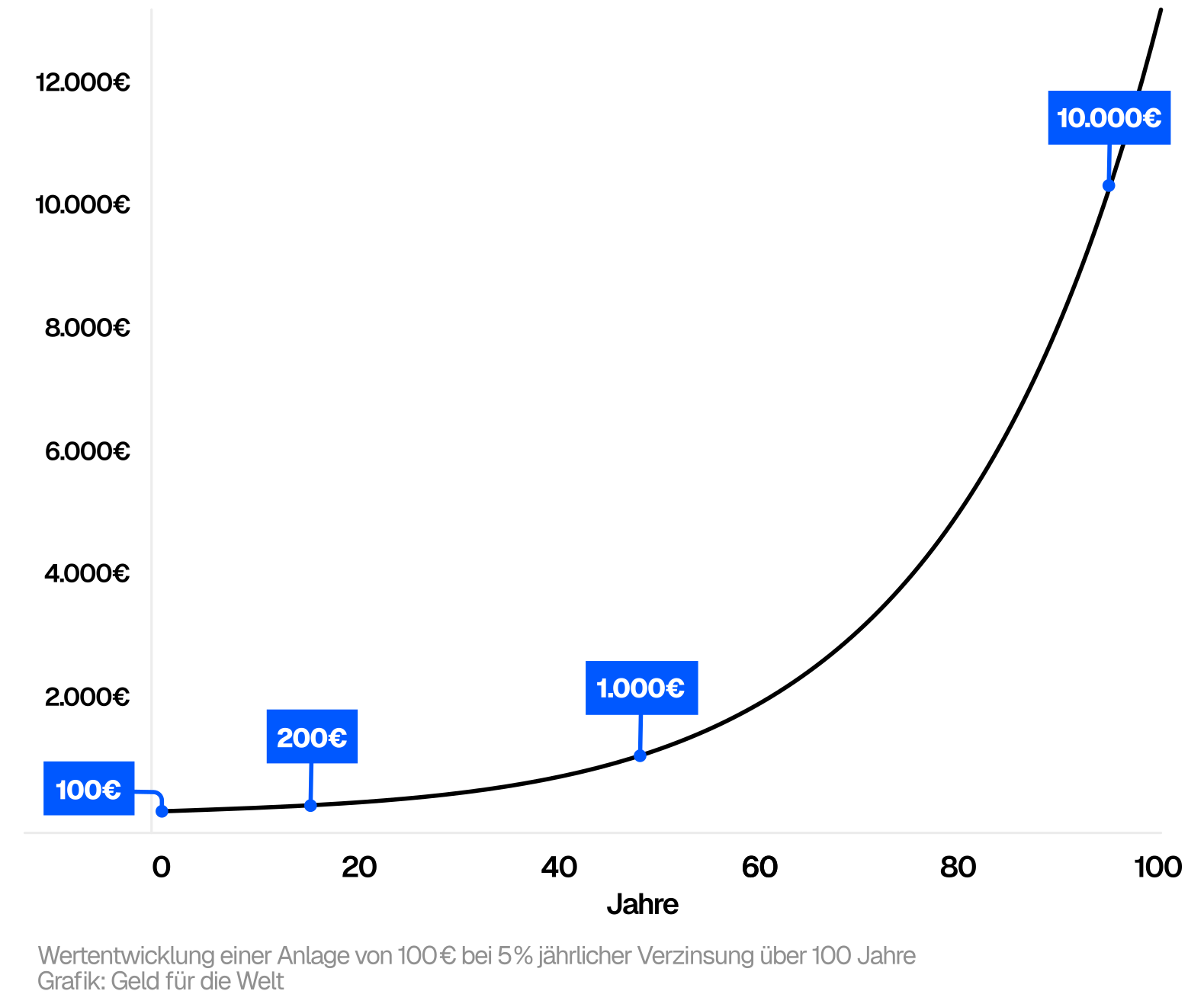
With each passing year, your balance grows faster:
- Year 15: The first blue flag marks the moment when the interest earned exceeds your original investment.
- Year 48: Your balance has increased tenfold.
- Year 95: Your initial capital has grown to one hundred times its original value.
Why Financial Experts Recommend Long-Term Investing
The compound interest effect is one of the main reasons why financial experts recommend staying invested for the long term — especially in assets that may fluctuate significantly in the short term but deliver solid returns over time.
A clear example is the global stock market: historically, its average inflation-adjusted return has been around 7% per year. In the short term, however, it fluctuates considerably; during crises, temporary losses of 50% or more are possible. Anyone investing for only a short period therefore faces a high risk of loss. At the same time, the potential of the compound interest effect remains unused.
If your money remains invested over the long term, strong fluctuations tend to balance out over time. The average return approaches its historical level — and thanks to the compound interest effect, your wealth grows faster with each passing year.