Deworm the World: Update 2026
Julian Lindenberg• Updated November 24, 2026
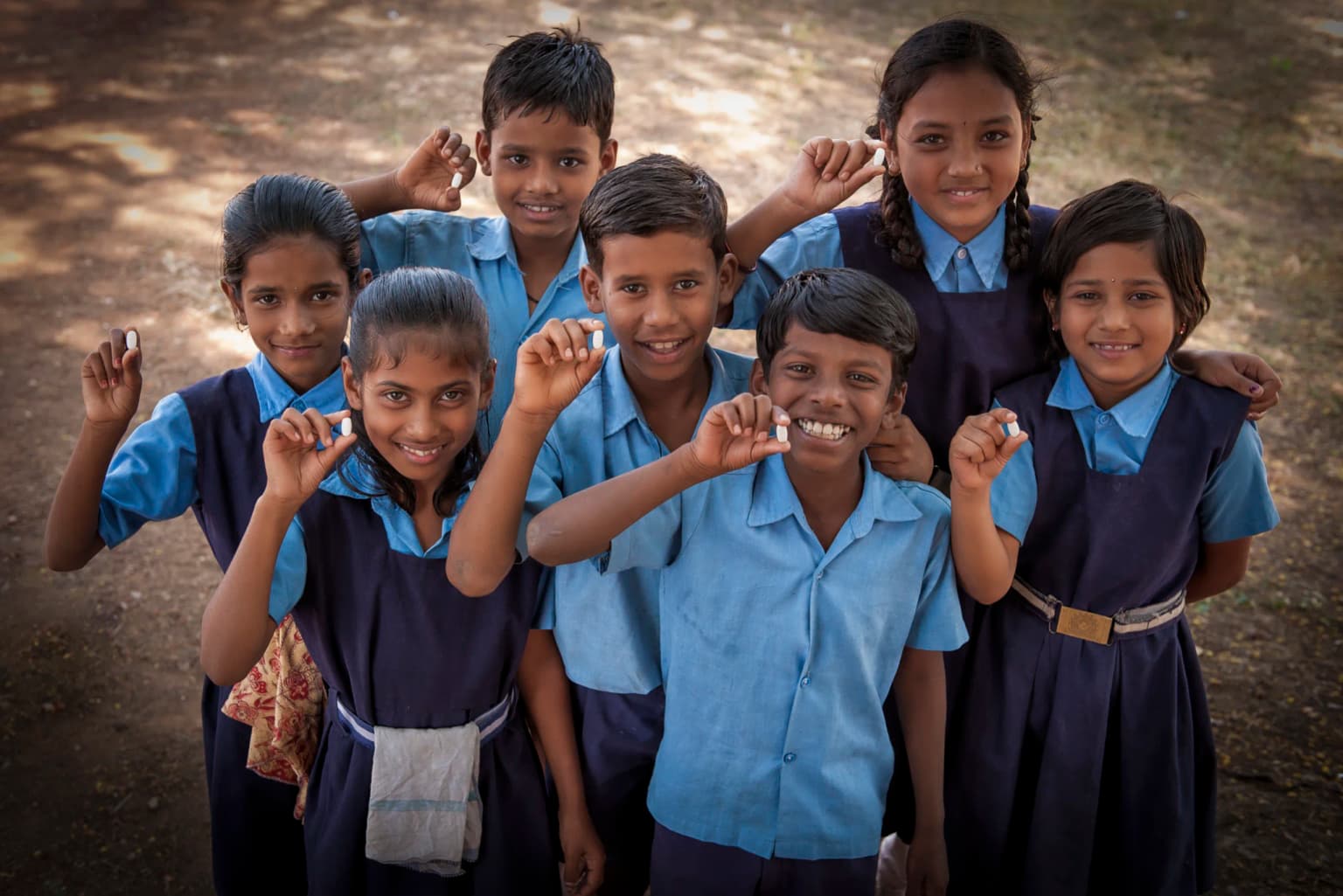
Evidence Action
Milestones from Evidence Action – Deworm the World
1.5 billion people worldwide suffer from parasitic worm infections – children are especially affected. Around 895 million children are currently at risk because they lack clean water and sanitation. Since 2014, Evidence Action has provided an evidence‑based answer: one tablet per treatment reliably protects a child and costs on average less than US $0.50 (Evidence Action).
Since its founding, Deworm the World has delivered more than two billion treatments; in 2024 alone, 198 million treatments were delivered in India, Kenya, Nigeria, Pakistan and Malawi (Evidence Action).
Several developments stand out from the 2024/25 programme years:
- Malawi: For the first time, Evidence Action is combining the deworming programme with the Equal Vitamin Access initiative, distributing iron and folic‑acid supplements at the same time (Evidence Action Malawi, September 2024).
- Kenya: Together with Evidence Action, the government launched the 12th nationwide deworming round, aiming to treat a further six million schoolchildren (Evidence Action Kenya, June 2024).
- Nigeria: Five states now deworm more than 6 million children annually; since 2016, 28 million treatments have been delivered (Evidence Action Nigeria).
- Funding: A GiveWell‑recommended US $4.4 million renewal grant secured programmes in India, Kenya, Nigeria and Pakistan through 2026 (GiveWell, March 2024). The funding outlook has changed considerably since then – see below.
The Problem
Schistosomiasis and soil‑transmitted helminthiasis are classified as “neglected tropical diseases”. Infections lead to anaemia, stunted growth and can cause long‑term income losses. In a randomised trial in Kenya, dewormed children were absent from school 25 % less often; two decades later, two to three additional years of deworming were associated with 13 % higher income (Evidence Action).
How strong is the evidence?
The long‑term income effects of deworming are debated among researchers. While the Kenya study by Miguel/Kremer and the follow‑up work by Baird et al. find substantial effects, aggregating reviews – such as the relevant Cochrane review – reach more cautious conclusions. Deworming remains attractive because it is extremely cheap: even a small expected effect justifies a cost of under US $0.50 per treatment. But the uncertainty belongs in an honest account.
The Solution – What Changed in 2024/25
- Integration of health services: In Malawi, deworming is combined with iron/folic‑acid distribution through schools, cutting logistics costs and tackling two health issues at once (Evidence Action Malawi, September 2024).
- Scaling in Nigeria: A single pilot state has grown into a sub‑regional hub with about 40 staff; worm prevalence in Rivers State fell from 43.1 % (2014) to 13.5 % (2023) (Evidence Action Nigeria).
- Exit strategies & cost reduction: In India and Kenya, Evidence Action is testing remote digital support so that mature programmes can be handed over to governments while costs continue to fall (GiveWell, March 2024).
Impact – Current Figures
- 48 % – 97 % reduction in worm infections in regions served for many years (Evidence Action).
- US $23 billion estimated lifetime productivity gain for children treated so far (Evidence Action).
- In Malawi, over three years and across all 28 districts, 3.5 million children are to be reached, preventing 900,000 cases of anaemia (Evidence Action Malawi, September 2024).
The Organisation – Funding & Outlook
Evidence Action follows an evidence‑based scale‑up model: only programmes that pass the internal “Accelerator” are deployed broadly. School‑based HPV vaccination is currently at stage 5 of that process – the scoping phase, in which the organisation is examining whether vaccination can be attached to existing deworming structures. No pilot has launched yet (Evidence Action, in‑development programmes).
On funding, the picture has shifted noticeably. In May 2025, GiveWell recommended a further grant of US $1.4 million for 2027 – explicitly as a phased exit (GiveWell, May 2025):
- Kenya receives a final year of support worth US $830,000; after that the programme is to be handed to the government or funded from other sources.
- Pakistan (Khyber Pakhtunkhwa) receives exit funding, as GiveWell considers cost‑effectiveness there borderline.
- In Nigeria, funding continues for four states (Cross River, Ogun, Oyo, Rivers); support for Lagos ended in 2025.
- India is no longer included in this grant.
GiveWell states that it intends to “responsibly reduce” its deworming investment and no longer treats deworming as a priority area. For donors this means: the programmes continue, but their future funding depends more than before on other funders – including foundations such as the IMC Pacific Foundation – and on governments taking them over.
Questions & Answers
How low are the costs really?
Using government logistics and volunteer teachers, the total cost – including medication, training and monitoring – averages < US $0.50 per treatment (Evidence Action).
Why is Malawi a new focus country?
Worm infections and anaemia frequently occur together there. The dense school network allows a cost‑effective dual approach across all 28 districts (Evidence Action Malawi, September 2024).
What did the 2024 GiveWell renewal grant fund?
It covered programme costs in Nigeria, Pakistan, Kenya and India for 2024–2026 and financed impact studies to determine the optimal time for hand‑over to governments (GiveWell, March 2024). The follow‑up grant of May 2025 is considerably smaller and geared towards exit.